
Your sales team is not the problem. I want to say that upfront.
The problem is that your pipeline has gaps, and those gaps are almost never caused by bad salespeople. They are caused by bad systems. Leads fall through because follow-ups are manual. CRM data goes stale because nobody has time to update it. Qualified prospects slip away because qualification itself is a slow, human-dependent process.
As per HubSpot Sales Trends Report 2024, Sales reps spend just 28 to 30% of their time actually selling. The rest? Admin tasks, follow-ups, data entry, and low-impact activities that frankly do not need a human at all.
AI agents do not fix this by replacing your team. They fix it by taking over the parts that were never meant to be a person's job in the first place. Here is how that plays out with Pushable.ai.
I. Let's Talk About Where Pipelines Actually Break
Most sales leaders I speak to assume their pipeline problems are about motivation or skill. Sometimes that is true. But more often, the same three structural issues keep coming up.
- Speed to lead: Getting to a new lead within five minutes versus five hours makes a measurable difference in conversion. Most teams are consistently slow here, not because they do not care, but because nobody is watching inbound 24/7.
- Follow-up consistency: The average B2B deal takes eight touchpoints to close. Most reps stop at two or three because manually tracking and scheduling follow-ups across 40 active leads is genuinely difficult.
- CRM data quality: When CRM records are outdated, pipeline forecasts become fiction. And CRM records go outdated because manual entry is the last thing anyone wants to do after a long day of calls.
None of these are motivation problems. They are workflow problems. And that matters, because workflow problems have workflow solutions.
The Fullview AI Statistics 2025 states that 83% of sales teams using AI saw revenue growth in 2024. Teams not using AI? 66%. The gap is widening, and it is almost entirely explained by how much manual work each team is still doing.
II. What AI Agents Are Actually Doing in Sales Pipelines Right Now
1. Qualifying Leads While Your Team Sleeps
An AI agent monitors inbound leads across your website, email, and connected platforms around the clock. It scores each lead against your criteria and routes the qualified ones to the right rep immediately, not the next morning when someone checks their inbox.
Your team starts every day with a prioritised, pre-qualified list. That alone changes how the day begins.
AI-powered sales teams can increase leads by up to 50%, according to Salesforce. The biggest driver is not magic. It is response speed and consistent follow-through.
2. Running Follow-Up Sequences on Autopilot
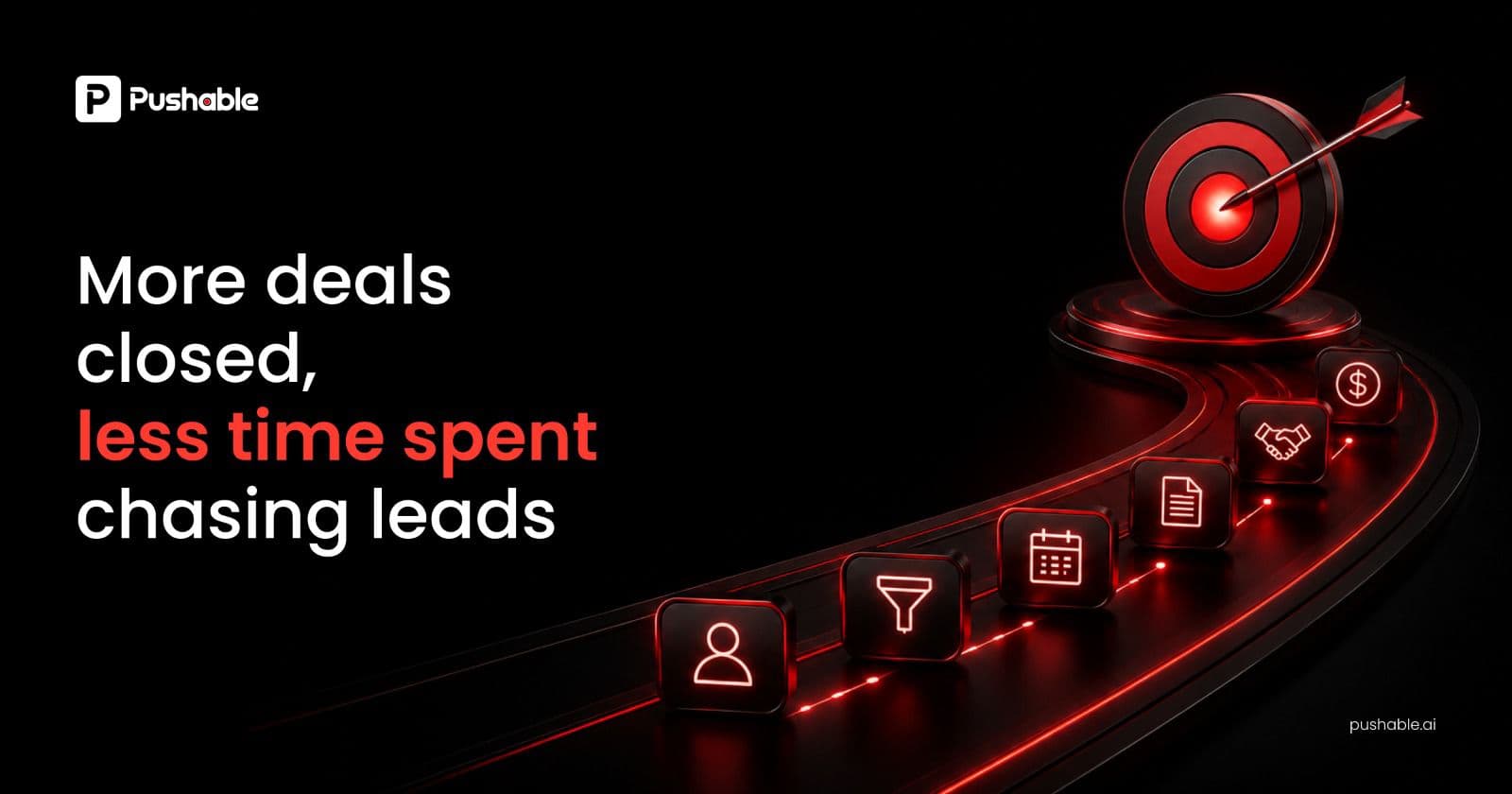
Once a lead enters the pipeline, an AI digital worker takes over the cadence. The right message goes out at the right time based on where that lead sits in the funnel. Responses get tracked. Warm signals get flagged for a human rep with everything they need to pick up the conversation.
Your reps stop spending time chasing. They start spending time closing. That is a completely different kind of day.
3. Keeping CRM Data Actually Accurate
After every call, email, or meeting, the agent updates the CRM. Deal stage, contact notes, next steps. All of it, logged automatically, without the rep doing anything after hanging up.
56% of sales professionals who use AI daily are twice as likely to exceed their targets compared to those who do not, as per LinkedIn State of Sales 2025. A big part of that is simply having better data to work from.
Clean CRM data means accurate forecasting. It means sales managers can trust the numbers they are looking at. It means nobody is flying blind at the end of the quarter.
4. Handing Off to Reps With Full Context
When a lead is ready for a human, the AI agent does not just send a notification. It hands off a complete picture: what the lead engaged with, what stage they are at, any objections that have come up, and a recommended next step.
Reps walk into the conversation prepared. No scrambling. No reading back through email chains to figure out where things left off.
III. How Pushable.ai Makes All of This Happen Without Code
Pushable.ai is a no-code AI agent builder platform that connects to 500+ tools, including whatever CRM, email client, and communication platform your sales team is already using.
You build agents that cover your entire sales process, from the moment a lead comes in to the moment a deal closes, without writing a single line of code. Persistent memory means agents retain context across sessions. Team collaboration features mean your sales ops, marketing, and leadership can all work from the same setup.
And unlike most enterprise automation platforms, Pushable.ai is priced for growing teams. You get serious AI workforce capability without a six-figure contract to go with it.
IV. Here Is What Actually Changes
I find before-and-after comparisons more useful than abstract promises, so let's be concrete.
Before AI Agents
- Reps spend 3 to 4 hours daily on admin, scheduling, and data entry
- Follow-up depends entirely on individual rep discipline, which means it is inconsistent
- CRM data reflects what people remembered to log, not what actually happened
- New leads sit uncontacted for hours while everyone works through their existing task list
After AI Agents
- Reps spend the majority of their time on calls, demos, and closing conversations
- Every lead in the pipeline gets consistent, timely follow-up regardless of how busy the team is
- CRM data updates in real time, making pipeline forecasts actually reliable
- New leads are qualified and routed to a rep within minutes, not hours
Same team. Same tools. Completely different output.
V. Who Gets the Most Out of This?
In my experience, the businesses that see the fastest results with AI agents tend to fall into a few categories.
- Startup founders who are managing sales themselves and need to maximise every lead without hiring a full team
- Sales team leaders who want to scale output without scaling headcount
- Agency owners managing multiple client pipelines at once and losing track of follow-ups
- Ops managers whose revenue teams are slowed down by too much manual process overhead
If your team is capable but your pipeline is consistently underperforming, the answer is probably not more people. It is better systems.